Maintaining proper water chemistry is essential for every pool owner. pH measures how acidic or basic your pool water is, on a scale from 1 to 14. Ideally, pool pH should stay between 7.2 and 7.8.
When pH drops too low, the water becomes acidic, leading to eye and skin irritation, corrosion of metal fixtures, etching of plaster surfaces, and reduced effectiveness of chlorine.
Fortunately, raising pH is straightforward once you understand the options.
When and Why pH Becomes Too Low
Low pH can result from several factors.
Heavy rainfall introduces naturally acidic water, often with a pH around 5 to 5.5.
Frequent swimming adds contaminants like sunscreen, sweat, and body oils that lower pH.
Chlorine tablets, especially trichlor, have a low pH around 2.8 to 3.0, and continued use can gradually pull pH down. Shocking the pool also temporarily reduces pH.
Even debris such as leaves and grass clippings contribute organic matter that increases acidity.
Signs that your pool pH is too low include stinging eyes, cloudy water, cracked grout or pool liner, and visible corrosion on ladders or railings. Testing at least twice per week using test strips, liquid kits, or digital meters will help you catch imbalances early.
Choosing the Right Chemical to Raise pH
There are three common chemicals used to raise pH: baking soda (sodium bicarbonate), soda ash (sodium carbonate), and borax. Each affects total alkalinity differently, so your choice depends on your current alkalinity level.
- Baking soda raises alkalinity significantly but only slightly raises pH. Use it when both pH and alkalinity are very low.
- Soda ash raises both pH and alkalinity moderately. It works well when alkalinity is also low but not critically low.
- Borax raises pH substantially with minimal impact on alkalinity. Choose borax when alkalinity is already in the ideal range (80–120 ppm) and you only need to raise pH.
If your alkalinity is already high, the best way to raise pH without increasing alkalinity is through aeration, which we cover later.
Step-by-Step Guide to Raising pH Chemically
1. Test Your Pool Water
Accurate testing is critical. Use a liquid test kit for precise readings of both pH and total alkalinity. Note your current pH and alkalinity values before adding anything.
2. Calculate Your Pool Volume
For rectangular pools: multiply length × width × average depth (in feet), then multiply by 7.5 to get gallons. For round pools: diameter × diameter × 5.9 gives the volume. Knowing your pool size ensures correct dosing.
3. Measure the Correct Dosage
As a general guideline:
- For 10,000 gallons, 27 oz of baking soda raises pH by about 0.02 and alkalinity by 10 ppm.
- For 10,000 gallons, 6 oz of soda ash raises pH by 0.1 and alkalinity by 3.5 ppm.
- For 10,000 gallons, 11 oz of borax raises pH by 0.1 and alkalinity by 1.8 ppm.
Always add only about 75% of the calculated dose first, then retest. You can add more later. This prevents overshooting.
4. Add the Chemical
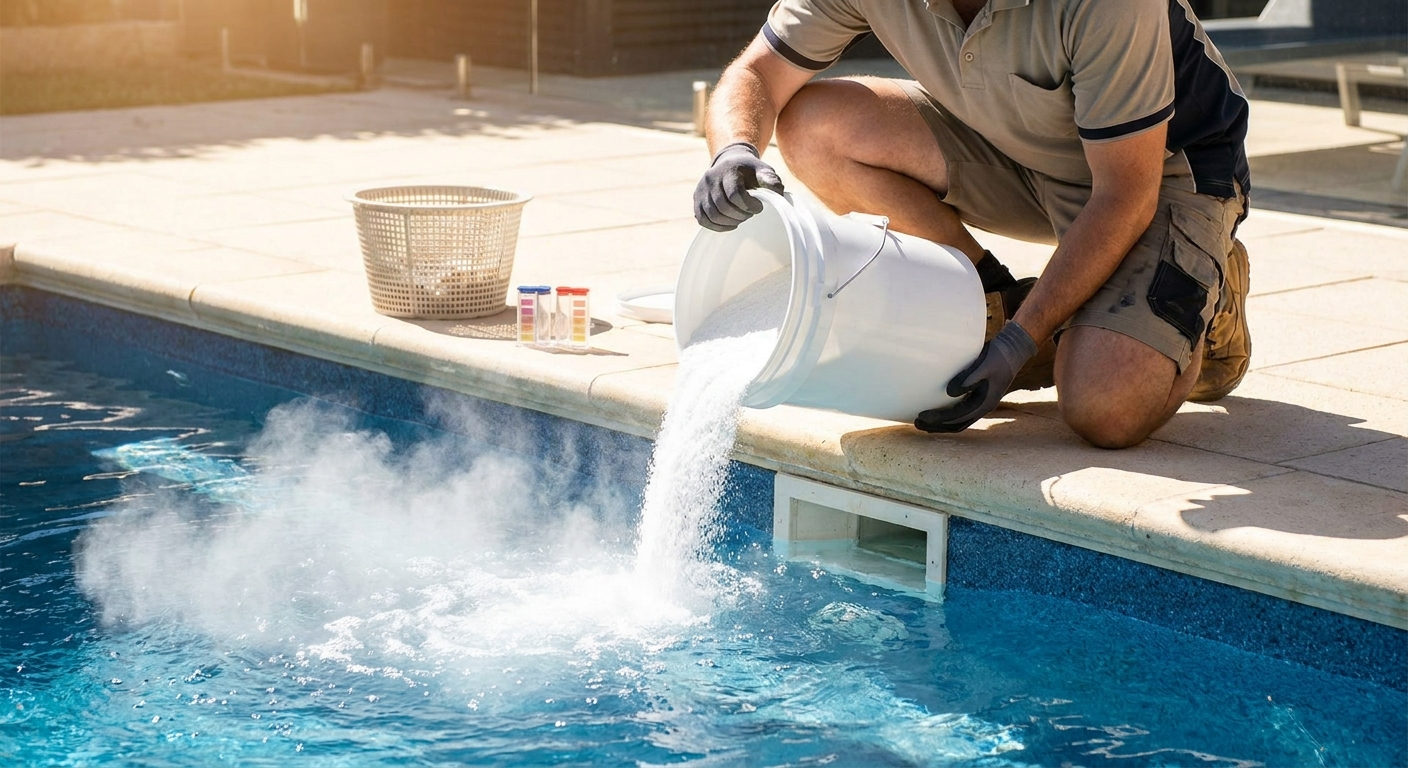
Sprinkle the chosen chemical near a return jet while the pump is running. The circulation helps dissolve the powder. Avoid adding it all at once to prevent cloudiness. After one hour, retest and adjust if needed.
Using Aeration to Raise pH Naturally
If your alkalinity is already balanced, adding chemicals would push it out of range. Instead, you can use aeration. Aeration is the process of exposing water to air, which releases carbon dioxide. Since dissolved carbon dioxide is acidic, removing it raises pH.
- Running your pool pump for longer hours
- Pointing return jets upward to break the water surface
- Activating water features like waterfalls, fountains, or sheer descents
- Encouraging more splashing from swimmers
Aeration works more slowly than chemical addition, but it is gentle and does not alter alkalinity. For persistent low pH with good alkalinity, this is the preferred method.
Monitoring and Maintenance
After raising pH, continue testing weekly or after heavy use and rainfall.
Keep your total alkalinity between 80 and 120 ppm to prevent pH from swinging wildly.
If you notice your pH repeatedly dropping, check your source water, reduce bather load, or consider switching to a different sanitizer.
Understanding how to raise ph in pool correctly ensures your water stays comfortable and your equipment lasts longer.
Common Mistakes to Avoid
- Adding chemicals without testing first.
- Adding too much at once, causing cloudy water or overshooting.
- Ignoring alkalinity levels when choosing a pH increaser.
- Expecting chemical additions to work immediately; allow time for circulation and retesting.
By following these guidelines, you can maintain balanced pool water all season long.