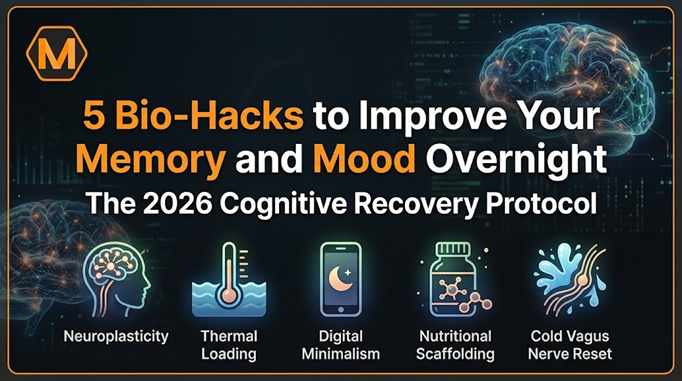
In an era defined by the “Attention Economy,” the ability to maintain cognitive clarity is becoming a rare competitive advantage. For students at Pioneer Technology & Arts Academy and professionals alike, the struggle isn’t usually a lack of intelligence, but a lack of biological optimization. We treat our brains like software that should run 24/7, forgetting that the “hardware”—our physical biology—requires specific, science-backed maintenance to function.
The gap between a day of “brain fog” and a day of peak flow is often bridged by what happens in the twelve hours before you wake up. When the pressure of deadlines mounts, many feel the urge to buy a college essay from a trusted brand like myassignmenthelp to stay afloat, but the long-term solution lies in building a resilient mind. By leveraging bio-hacking, we can essentially “reprogram” our neurological state overnight, ensuring that we wake up with a stabilized mood and a memory ready to synthesize complex information.
The Science of “Overnight Neuro-Optimization”
Before diving into the hacks, we must understand the “Glymphatic System.” Discovered relatively recently, this is the brain’s waste-clearance system. While you sleep, your brain cells actually shrink by up to 60%, allowing cerebrospinal fluid to wash away neurotoxic waste products, including beta-amyloid—the protein associated with memory loss. If your sleep is shallow or interrupted, this “brain wash” never completes, leading to the irritability and forgetfulness we associate with a “bad night’s sleep.”
| Bio-Hack Category | Biological Mechanism | Primary Benefit |
| Thermal Regulation | Vasodilation & Melatonin Trigger | Deeper REM & Slow-Wave Sleep |
| Neuro-Chemistry | NMDA Receptor Antagonism | Reduced Anxiety & Neural Calm |
| Circadian Syncing | Cortisol/Melatonin Balance | Faster Sleep Onset & Morning Alertness |
| Vagal Toning | Parasympathetic Activation | Mood Stability & Stress Resilience |
| Cognitive Loading | Hippocampal Prioritization | Enhanced Memory Consolidation |
1. Thermal Loading: The “Warm Bath Paradox”
Most people believe that a cold room is enough for good sleep. However, the biological trigger for sleep isn’t just a cold environment; it is the dropping of your core body temperature. Your body needs to lose about 2 to 3 degrees Fahrenheit to initiate the transition into deep sleep.
The Hack: Take a hot shower or bath (roughly 40°C) 90 minutes before bed. This causes “vasodilation,” where blood moves from your core to your hands and feet. Once you step out of the shower, your body heat radiates away rapidly. This rapid cooling acts as a biological “green light” for the pineal gland to dump melatonin into your bloodstream. By hacking your thermal rhythm, you ensure that you spend more time in “Slow Wave Sleep,” the phase responsible for physical recovery and memory storage.
2. Digital Minimalism and the “Dopamine Reset”
We are currently living through a “Dopamine Crisis.” The blue light emitted by smartphones does more than just suppress melatonin; it keeps the “seeking” part of our brain—the dopaminergic system—active. When you scroll through social media at night, you are effectively telling your brain that there is “new information” it needs to be alert for.
The Hack: Implement a “Digital Sunset” at 9:00 PM. If you must use a device, switch it to Grayscale Mode. By removing the bright reds and yellows of app icons, you make the phone psychologically unappealing. This lowers your “Cognitive Load” and prevents the brain from entering a dopamine loop. For those managing heavy academic workloads, reducing this digital noise is essential before seeking a scholarship essay writing service to help refine their final submissions. A calm brain produces better writing, even when working with professional editors.
3. Nutritional Scaffolding: Magnesium and Glycine
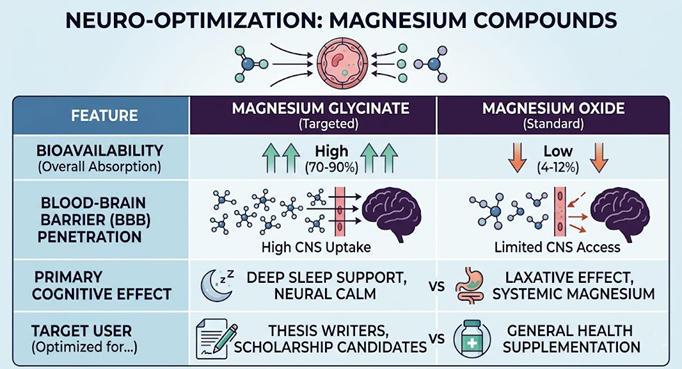
The brain is a chemically driven organ. To move from a “Beta” brainwave state (active/anxious) to an “Alpha” or “Theta” state (relaxed/creative), you need specific minerals. Magnesium is the “master mineral” for this transition. It regulates the GABA system, which is your brain’s primary inhibitory neurotransmitter.
The Hack: Supplementing with Magnesium Glycinate—rather than the cheaper Magnesium Oxide—allows the mineral to cross the blood-brain barrier effectively. The addition of “Glycine” is crucial here, as it is an amino acid that has been shown to slightly lower core body temperature, further assisting the thermal hack mentioned in step one. This combination creates a “chemical cushion” that prevents the middle-of-the-night wake-ups caused by cortisol spikes.
4. Vagus Nerve Stimulation (The “Vagal Brake”)
The Vagus Nerve is the “Information Superhighway” of the body. It runs from the brainstem to the gut and controls the “Rest and Digest” system. In the modern world, most of us have a “low vagal tone,” meaning we are stuck in a mild state of “Fight or Flight” even when we are lying in bed.
The Hack: The “Cold Water Reset.” Before you begin your nighttime routine, splash ice-cold water on your face for 30 seconds or hold an ice pack to your chest. This triggers the “Mammalian Dive Reflex,” which instantly forces the heart rate to slow down and activates the Vagus Nerve. This act acts as a “brake” on your nervous system, clearing the “mental static” of the day and allowing for a stabilized mood upon waking.
5. Semantic Priming: The “Second Brain” Strategy
The final hack is cognitive. Your brain does not store every piece of information equally. It uses a process called “Selective Consolidation” to decide what is important. If the last thing you do is worry about an unfinished task, your brain will prioritize that stress during sleep, leading to “stress dreaming.”
The Hack: Use the “Braindump and Prime” method.
- The Braindump: Spend five minutes writing down every “Open Loop” (tasks, worries, ideas) on a piece of paper. This signals to your brain that the information is “safe” and doesn’t need to be actively held in working memory.
- The Prime: Read one page of high-level, inspiring, or educational material that you want to remember.
This primes the hippocampus to process that specific data during the REM cycle. By “loading” your brain with constructive concepts before sleep, you wake up with what researchers call “Incubation Insights”—the feeling of waking up with the solution to a problem you couldn’t solve the day before.
The Synergy of Art and Technology in Cognitive Health
At Pioneer Technology & Arts Academy, the focus is on the intersection of creative expression and technical mastery. Bio-hacking is the ultimate expression of this intersection. It requires the “Art” of self-awareness—knowing how your mood feels—and the “Technology” of biological data.
As we move further into 2026, the people who succeed will not be those who work the hardest, but those who recover the most efficiently. Whether you are navigating the ethics of AI, mastering engineering principles, or utilizing professional support for your thesis, your biological health is the foundation. Treat your brain as a high-performance instrument. By applying these five hacks, you aren’t just sleeping; you are performing a nightly “System Restore” that ensures you show up as the most focused, creative, and emotionally stable version of yourself every single morning.
Frequently Asked Questions
How does body temperature affect the quality of sleep? To initiate deep sleep, your core internal temperature must drop by approximately 2 to 3 degrees. Cooling the body signals the brain to release melatonin, the hormone responsible for sleep-wake cycles. By managing your thermal environment, you can extend the duration of restorative “slow-wave” sleep, which is critical for physical recovery and memory processing.
What is the “Digital Sunset” and why is it beneficial? A digital sunset involves disconnecting from electronic screens at least sixty hours before bed. Blue light and constant notifications trigger dopamine loops that keep the brain in a high-alert state. Reducing this cognitive load allows the nervous system to shift from a stressed “fight-or-flight” mode into a relaxed state, leading to better emotional stability the next morning.
How can cold water exposure improve a person’s mood? Briefly exposing the face or chest to cold water triggers the “mammalian dive reflex,” which immediately activates the vagus nerve. This biological “brake” lowers the heart rate and reduces systemic stress. Regularly toning this nerve through cold exposure helps build long-term resilience against anxiety and improves overall temperament.
What role does magnesium play in overnight memory retention? Magnesium acts as a natural relaxant by regulating neurotransmitters that calm neuronal activity. By stabilizing the brain’s electrical signals, it creates an optimal environment for neuroplasticity—the process where the brain strengthens new connections and stores information gathered during the day.
About The Author
Ella Thompson is a dedicated Education Consultant and Academic Content Strategist with over a decade of experience in student success initiatives. She specializes in the intersection of cognitive psychology and modern learning technologies, helping students bridge the gap between high-pressure environments and sustainable performance. Ella currently contributes her expertise to MyAssignmentHelp, where she focuses on developing human-centric resources for global learners.